
Amazon FBA vs Shopify: Which is Best for Sellers in Pakistan in 2026?
By Markify Team
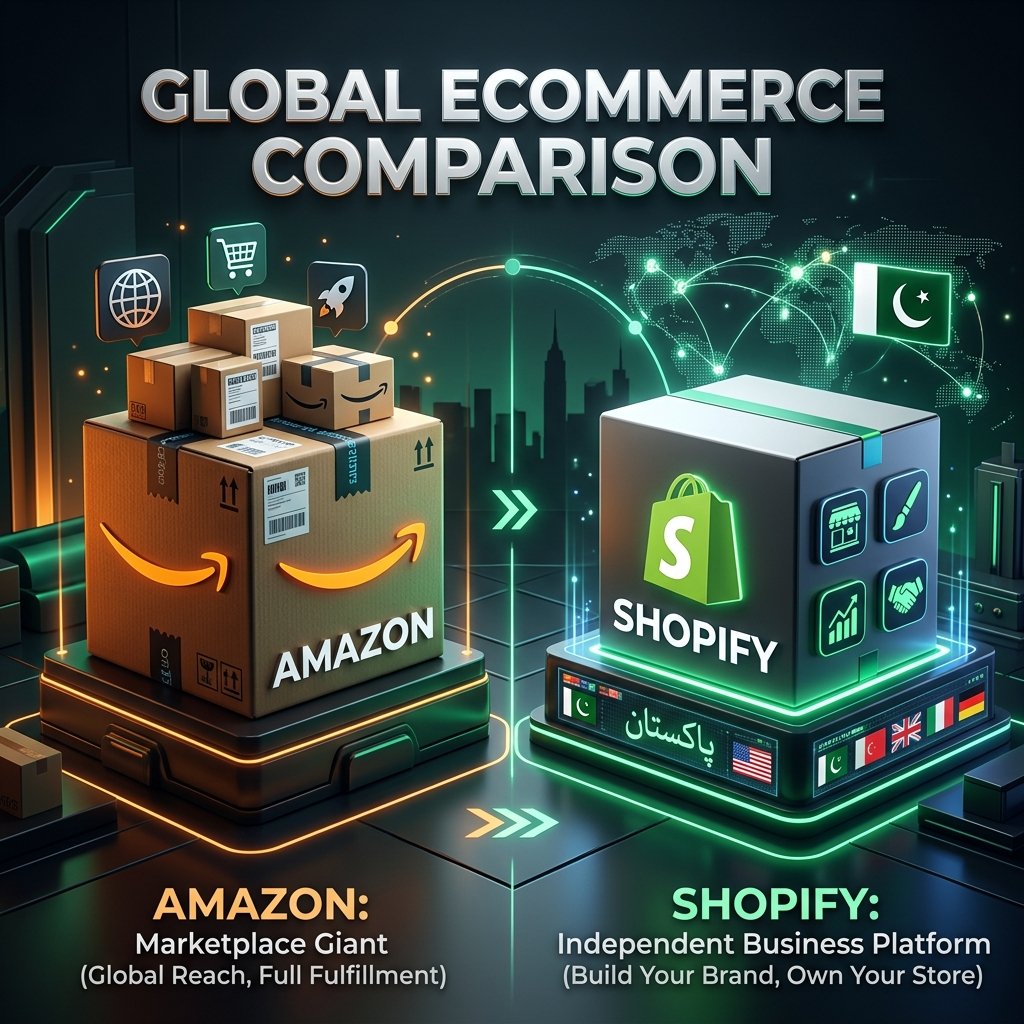
Amazon FBA vs Shopify: Which is Best for Sellers in Pakistan?
For entrepreneurs in Pakistan looking to build a global ecommerce empire, the first major decision is always the platform. Should you list your products on the world's largest marketplace, Amazon, or should you build your own independent brand using Shopify?
At Markify Ecommerce, based right here in Lahore, we manage multi-million dollar portfolios across both platforms. Both have their unique advantages and challenges, especially when operating from Pakistan. Let’s break down the pros and cons of each in 2026.
1. Amazon FBA: The Traffic Juggernaut
Amazon's Fulfillment by Amazon (FBA) program allows sellers in Pakistan to send their inventory directly to Amazon's warehouses in the US, UK, or UAE. Amazon handles shipping, customer service, and returns.
Pros for Pakistani Sellers:
- Built-in Traffic: You don't need to be a Facebook Ads wizard to get sales. Amazon has millions of buyers actively searching for products every second.
- Logistics Solved: FBA means you don't have to worry about international shipping times for individual orders. You ship bulk to the warehouse, and Amazon delivers it via Prime.
- Global Trust: Buyers trust Amazon. They don't need to trust your brand specifically to make a purchase.
Cons for Pakistani Sellers:
- Fierce Competition: You are competing head-to-head with Chinese manufacturers.
- Account Suspensions: Amazon is notoriously strict. A single mistake in your listing or a few bad reviews can lead to a suspension, freezing your funds.
- High Fees: FBA fees, storage fees, and PPC costs can eat heavily into your margins.
2. Shopify: Total Brand Control
Shopify is a platform that allows you to build your own standalone website. You own the customer data, the branding, and the rules.
Pros for Pakistani Sellers:
- You Own the Customer: Unlike Amazon, Shopify gives you the customer's email address. You can retarget them, run email campaigns, and build long-term brand loyalty.
- No Direct Competitors on Your Page: When a customer is on your Shopify store, they only see your products, not cheaper alternatives suggested right below the Buy Box.
- Higher Margins: Without Amazon's hefty referral and FBA fees, your profit margins can be significantly higher (though this is offset by your marketing spend).
Cons for Pakistani Sellers:
- You Must Drive Your Own Traffic: If you build a Shopify store, nobody will visit it unless you pay for traffic (Meta Ads, TikTok Ads) or invest heavily in SEO.
- Logistics Complexity: Shipping from Pakistan to international customers can take weeks, which hurts conversion rates. You will likely need to partner with a 3PL (Third-Party Logistics) provider in your target country.
The Markify Verdict: Which Should You Choose?
The answer depends entirely on your product and capital.
If you have a generic product and want to capitalize on existing search volume without worrying about logistics, Amazon FBA is the way to go. It requires more upfront capital for inventory, but the traffic is guaranteed.
If you have a unique product, a strong brand vision, and are skilled in digital marketing (TikTok, Instagram, Meta), Shopify offers the highest long-term valuation and control.
Why not both? At Markify Ecommerce, our most successful clients use a hybrid approach. They use Amazon for cash flow and volume, while simultaneously building a premium Shopify store to capture loyal, repeat customers.
Need help launching your brand on either platform? Contact Markify Ecommerce today and let our in-house Lahore team scale your business globally.